
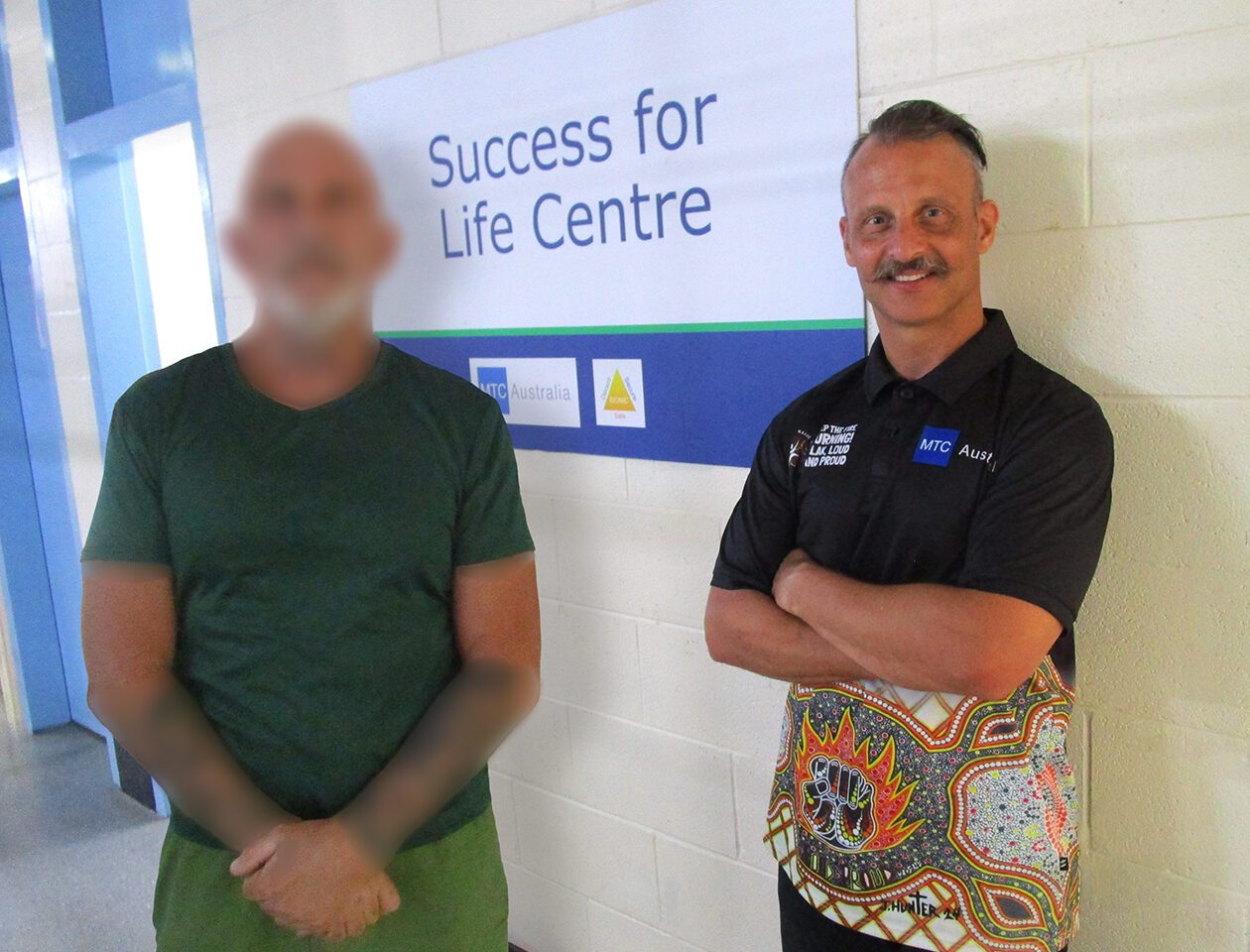
A program specifically designed for inmates at Parklea Correctional Centre is filling the knowledge gaps of Australian Indigenous history and culture, leading to healing and understanding for Aboriginal and non-Aboriginal participants.
The 10-week Cultural Connection program was jointly designed by the team at Parklea and Adam Nobilia from Dharug social enterprise Muru Mittigar, which means “pathway to friends”. It covers topics such as identity, values, history, songlines and healthy mind, body and relationships.
The program is currently run in Parklea’s Drug Recovery Wing, where inmates take the pledge to stop using drugs and undertake a 12-week program. It consists of a suite of workshops, discussions and education on topics such as substance misuse, personal development, faith-based and lifestyle programs.
Adam said each session of the Cultural Connection program centres around a group discussion where participants are encouraged to share knowledge and ask questions they might find difficult in another context.
“This format provides an important opportunity for men to practise reflection and empathy and to experience the liberation of vulnerability,” Adam said.
“It also allows for discussions on healing our mind, body and relationships and compliments the outcomes of existing drug and alcohol programs in encouraging healthy and wise decisions.”
Adam said one of the overarching aims of the course was to address the impact of inter-generational trauma, which has affected Aboriginal communities for decades.
“This has left some participants believing that going to prison is an unavoidable rite of passage,” Adam said.
“The truth is, it’s disconnection from Aboriginal culture that leads people to gaol and only the realignment with the values and wisdom of Elders can foster pride in culture and heal the spirit.”
While the program was written for Indigenous inmates, other men in the Drug Recovery Wing are invited to join and learn about Aboriginal culture in a safe environment where questions are encouraged.
“Reconciliation begins with acknowledging the traumas of our history and having honest conversations about the impacts of colonisation,” Adam said.
“One participant, a former police officer, acknowledged that if he’d known then what he’d learned in the sessions, his interactions with Aboriginal people would have been markedly different.”
Steve*, a proud Wiradjuri man, said he enjoyed learning about his culture and how to communicate better.
“I’ve always been very interested in culture since my mum told me she was Aboriginal,” Steve said.
“Culture and family is everything – we do everything for our family.
“Adam is a really good teacher and I learned a lot of communication skills and we practised doing it face-to-face.
“We spoke about alcohol, drugs, domestic violence and relationships, how to treat women and see our triggers.”
Steve has become a mentor to other inmates and has started making Indigenous art.
“If I see someone stressing out, I encourage them to do art,” Steve said.
“It’s good for mental health and to relax. Everything I’m stressing about, it fades away and I’m in another world.
“I try to be a mentor and look after the young blokes. It’s a good feeling when they thank you.
“I’m always trying to get something positive in where I am.”
*Name has been changed.